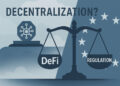


As the Markets in Crypto-Assets (MiCA) regulation takes effect across the European Union, global crypto exchanges are accelerating their EU expansion plans. Major players like OKX, Crypto.com, and Bitpanda are positioning themselves to operate under a more unified, EU-wide compliance framework.
MiCA: A Turning Point for Crypto in Europe
MiCA is the EU’s first comprehensive framework for crypto-assets, designed to reduce regulatory fragmentation across all 27 member states. It sets out clear rules for crypto-asset service providers (CASPs)—such as exchanges, brokers, and custodians—and introduces stronger requirements for transparency, governance, and consumer protection.
MiCA is also closely linked to other EU rules that shape how crypto platforms operate in practice, including anti-money laundering obligations and the EU-wide Transfer of Funds Regulation (often discussed as the “travel rule” for crypto transfers).
Why Top Exchanges Are Moving In
For large exchanges, MiCA offers something the EU previously lacked: a clearer path to scale across Europe without rebuilding the business for each country’s approach. While national supervisors remain involved, MiCA’s harmonised rulebook supports broader EU market access once authorisation is obtained in an EU member state, subject to MiCA’s framework.
How OKX, Crypto.com, and Bitpanda fit the MiCA shift
- OKX has been linked in reporting to engagement with EU jurisdictions such as France and Lithuania as part of building a regulated European footprint.
- Crypto.com has pursued multiple European registrations and licences over time, reflecting a strategy of expanding regulated operations and aligning products with evolving EU requirements.
- Bitpanda, headquartered in Austria, has long marketed itself as a regulated, Europe-first platform—an advantage when compliance expectations become more uniform EU-wide.
What This Means for Users in the EU
For EU users, MiCA aims to raise baseline standards across the market—without eliminating risk. In practical terms, consumers can expect more consistent disclosures, stronger operational requirements for service providers, and clearer accountability.
Key user-facing changes MiCA is designed to support
- Clearer information: More standardised disclosures about services, fees, and certain token-related information.
- Stronger governance and controls: Higher expectations for risk management, incident handling, and internal oversight at CASPs.
- Market integrity measures: Rules targeting market abuse and improving transparency around trading activity.
- More consistent EU-wide expectations: A move away from patchwork national interpretations toward a more uniform compliance baseline.
However, MiCA is not a guarantee against losses or platform failures. Users should still assess platform risk, product risk, and token risk—especially for highly volatile crypto-assets.
Impact on the Global Crypto Market
MiCA’s approach is closely watched outside Europe because it combines market access with detailed conduct and prudential expectations. As more large platforms build EU-compliant operations, the EU model could influence how other jurisdictions balance innovation with consumer protection and financial stability objectives.
For exchanges, MiCA compliance can also become a reputational signal—especially for institutional counterparties that require clearer regulatory status and operational standards.
Conclusion: Europe’s Rise as a Crypto Leader
With a unified rulebook and clearer expectations for crypto service providers, the EU is becoming one of the most structured environments for crypto operations. The expansion efforts of OKX, Crypto.com, and Bitpanda highlight the strategic value of MiCA-aligned presence: access to a large market, clearer compliance pathways, and potentially stronger user confidence driven by more consistent rules.
FAQ
Does MiCA automatically allow an exchange to operate across the entire EU?
MiCA is designed to support EU-wide market access through an authorisation obtained in an EU member state, under harmonised rules. In practice, firms still need to meet MiCA requirements and work with supervisors, and implementation details can vary as regulators apply the framework.
Is MiCA “live” everywhere in the EU now?
MiCA is an EU regulation with phased application dates, and the market has been transitioning through implementation and supervisory guidance. By 2026, many firms are operating under MiCA-aligned expectations, but timelines and supervisory approaches can still differ across member states.
Does MiCA make crypto safe for consumers?
MiCA strengthens safeguards and transparency requirements, but it does not remove core risks like volatility, liquidity shocks, hacks, or project failures. It is a regulatory framework, not a guarantee of returns or protection from losses.
Key takeaways
- MiCA creates a more unified EU rulebook for crypto-asset services, reducing fragmentation across member states.
- OKX, Crypto.com, and Bitpanda are expanding EU operations to align with MiCA-era licensing and compliance expectations.
- EU users should see more consistent disclosures and stronger platform governance requirements—but crypto risks remain.
- MiCA’s model may influence global regulatory approaches as other regions seek clearer crypto frameworks.
Learn more about MiCA and its impact on EU crypto law.
Related articles
- Citi Predicts Crypto Revival in 2026 as Regulation Advances
- BlockSec Unveils Phalcon Compliance 3.1 for Streamlined Crypto Asset KYT Screening
- Bitcoin Faces Potential Volatility as .7 Billion Options Expiry Looms
- Bitwise Predicts Bitcoin All-Time Highs by 2026 as ETFs Attract Strong Inflows
- Citi Predicts Bitcoin and Ether Recovery in 2026 as Crypto Regulation Advances