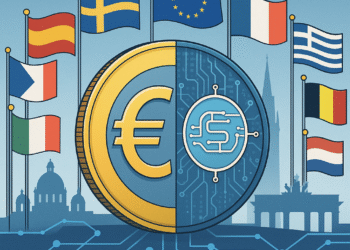


MiCA licensing in the EU is beginning to show clear national trends. Six months after the Markets in Crypto-Assets (MiCA) regulation came into force, Germany and the Netherlands have emerged as frontrunners in Europe’s evolving crypto regulatory landscape.
With 12 MiCA-licensed providers, Germany leads the continent. The Netherlands follows closely with 11 approved firms, while smaller countries like Malta, France, and Luxembourg also show early leadership.
MiCA: Six Months of Impact
Introduced to create a unified legal framework for crypto across the EU, MiCA has now been active for half a year. The regulation is designed to ensure:
- Consumer protection
- Transparent stablecoin issuance
- Strong anti-money laundering (AML) compliance
- Passporting rights across all EU/EEA member states
Its effects are already being felt. Countries that were previously regulatory pioneers—like Germany and the Netherlands—have quickly adapted to MiCA and are actively approving firms under its framework.
Country-by-Country Breakdown of MiCA Licensing
As of July 2025, the MiCA licensing landscape looks like this:
| Country | Number of Licensed Providers |
|---|---|
| Germany | 12 |
| Netherlands | 11 |
| Malta | 5 |
| France | 3 |
| Luxembourg | 3 |
| Others (combined) | ~19 |
This distribution reflects both regulatory readiness and the attractiveness of national environments for crypto firms. Germany’s strong institutional infrastructure and the Netherlands’ innovation-friendly policies make both countries appealing hubs.
What This Signals for EU Crypto Markets
The maturing regulatory ecosystem suggests several key trends:
- Regulatory clarity attracts investment – Firms are choosing jurisdictions that offer quick and reliable licensing.
- Europe is becoming a crypto compliance leader – The EU is now ahead of many global regions in creating enforceable digital asset rules.
- More firms are entering the legal fold – The number of MiCA-licensed entities is expected to grow steadily into 2026.
Why Germany and the Netherlands Lead
Germany has long been proactive in digital finance, with BaFin providing early guidelines on crypto custody and digital securities. The transition to MiCA simply streamlined what was already in motion.
The Netherlands, meanwhile, has encouraged crypto adoption through its fintech-forward regulatory agencies and openness to experimentation—especially in Amsterdam and Rotterdam’s financial districts.
Conclusion
MiCA licensing in the EU is not just about legal formalities—it’s reshaping the geography of the European crypto industry. With Germany and the Netherlands leading the way, and countries like Malta, France, and Luxembourg not far behind, Europe is quickly forming a compliant, stable, and scalable crypto economy. The next 6 months will be crucial as more providers seek to enter the licensed space—and more national regulators respond to the call.