

The European Union is at a crossroads. As global markets shift toward on-chain settlement and tokenised money, regulatory clarity and practical adoption have become urgent. Financial leaders continue to warn that Europe embrace stablecoins to avoid falling behind the United States and parts of Asia in the digital finance race.
Why Europe Must Embrace Stablecoins
Lorenzo Bini Smaghi, Chair of Société Générale and former European Central Bank (ECB) executive, has argued that stablecoins are not merely a short-lived experiment but a tool that can modernise Europe’s financial infrastructure.
As highlighted in the Financial Times editorial, stablecoins could support cross-border payments, tokenised public debt, and new forms of euro-denominated financial products. The EU’s financial competitiveness may increasingly depend on whether Europe embrace stablecoins in a way that is both innovative and aligned with EU safeguards.
How Europe Can Embrace Stablecoins in 2026
Stablecoins can offer benefits to consumers, businesses, and public-sector market infrastructure—especially when issued and distributed under EU rules:
- Faster, lower-cost cross-border payments across Member States and with trading partners, with clearer settlement finality and programmability compared to some legacy rails.
- Tokenised capital markets, including potential building blocks for on-chain issuance/settlement workflows (where permitted) and improved post-trade efficiency.
- Reduced reliance on non-EU stablecoins (and related policy exposure), by supporting compliant euro-denominated alternatives.
- More consistent access to digital payment tools across the Single Market, including fintech-led services that can scale via passporting.
In 2026, the key question is not whether stablecoins exist—they do—but whether Europe can channel them into a regulated, euro-supportive ecosystem. That is why many argue Europe embrace stablecoins with clarity and urgency.
MiCA Regulation and the Role of the ECB
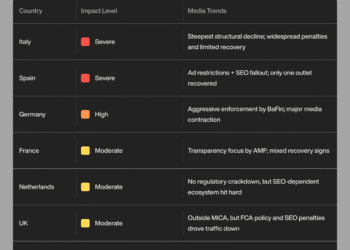
The Markets in Crypto-Assets Regulation (MiCA) now provides an EU-wide framework for crypto-asset service providers and for stablecoins (under MiCA terminology, asset-referenced tokens and e-money tokens). This has shifted the debate from “should stablecoins be regulated?” to “how should compliant stablecoins be integrated into Europe’s financial system?”
You can read the official MiCA text on EUR-Lex (Regulation (EU) 2023/1114).
What MiCA changes in practice
- Single-rulebook approach: MiCA aims to harmonise authorisation and conduct requirements across the EU, supporting cross-border scale via passporting.
- Stablecoin-specific obligations: Issuers face governance, reserve/asset management, disclosure, and oversight expectations designed to reduce consumer and systemic risks.
- EU policy trade-offs: The framework prioritises stability and consumer protection, while the market still needs operational clarity (e.g., consistent supervision, banking access, and payment interoperability) to unlock innovation.
The ECB’s role remains central because stablecoins intersect with monetary policy transmission, payment sovereignty, and the broader discussion around a digital euro. Even with MiCA in place, Europe’s approach will be shaped by how public institutions and supervisors balance innovation with financial stability.
Why the Time to Act Is Now
Stablecoins are increasingly used for 24/7 settlement, merchant payments, and treasury operations in other regions. The United States continues to see rapid private-sector adoption of dollar-denominated stablecoins for on-chain settlement and payment integrations, while several Asian markets are actively testing tokenised deposits, stablecoin payment rails, and CBDC-linked systems.
If Europe moves too slowly, the market could default to non-euro rails and non-EU issuers—undermining the EU’s strategic autonomy in payments and limiting Europe’s ability to shape global standards. To remain competitive, it is time Europe embrace stablecoins as part of a modern digital-finance strategy that supports the euro and the Single Market.
Conclusion
Stablecoins are no longer a niche experiment—they are becoming part of real-world financial plumbing. With MiCA now active and the regulatory baseline clearer than in prior years, the European Union has an opportunity to lead in compliant, euro-denominated stablecoin innovation. But leadership requires follow-through: consistent supervision, workable implementation, and a clear EU vision for how stablecoins coexist with traditional payments and future public initiatives. The time is now for Europe embrace stablecoins and strengthen its digital financial future.
FAQ
Are stablecoins legal in the EU under MiCA?
MiCA creates an EU-wide framework that allows stablecoins to be issued and offered under specific requirements and supervision. Whether a particular stablecoin can operate in the EU depends on its structure and whether the issuer complies with MiCA obligations and related EU rules.
Does embracing stablecoins mean replacing the euro or endorsing all crypto?
No. The policy discussion is primarily about enabling regulated, euro-supportive digital settlement instruments and payment innovation. Embracing stablecoins in the EU context means integrating compliant models while maintaining consumer protection, financial stability, and monetary policy safeguards.
Why does “EU relevance” matter for stablecoins?
Because payment sovereignty, Single Market scaling, and consumer protection are core EU priorities. If euro-denominated, compliant stablecoins do not develop, European users and businesses may rely more on non-EU issuers and non-euro settlement layers, reducing Europe’s influence over standards and risk controls.
Key takeaways
- MiCA has moved the EU from a fragmented environment to a single-rulebook baseline for stablecoins and crypto services.
- Euro-denominated, compliant stablecoins can improve payments and support tokenised financial markets while reducing reliance on non-EU coins.
- Competitiveness depends on implementation: supervision consistency, interoperability, and practical market access matter as much as rules.
- Europe’s choices on stablecoins intersect with broader goals: payment sovereignty, consumer protection, and the euro’s role in digital finance.
Related articles
- KuCoin Partners with Tomorrowland to Enhance Crypto Adoption in Europe
- EU Pushes for Euro Stablecoin to Defend Monetary Sovereignty
- Crypto Payroll Compliance: Key Steps for SMEs in 2025
- Crypto Firms in Spain Face Compliance Deadline as MiCA Regulation Takes Effect
- Bitvavo Among First Platforms Licensed Under EU MiCA Framework