

Starting July 1, 2027, the European Union will enforce strict new Anti-Money Laundering (AML) rules targeting cryptocurrency. Privacy coins like Monero, Zcash, and Dash will be banned, and anonymous crypto accounts will no longer be allowed anywhere in the EU. These measures are part of a wider effort to increase transparency and bring crypto assets in line with traditional finance regulations.
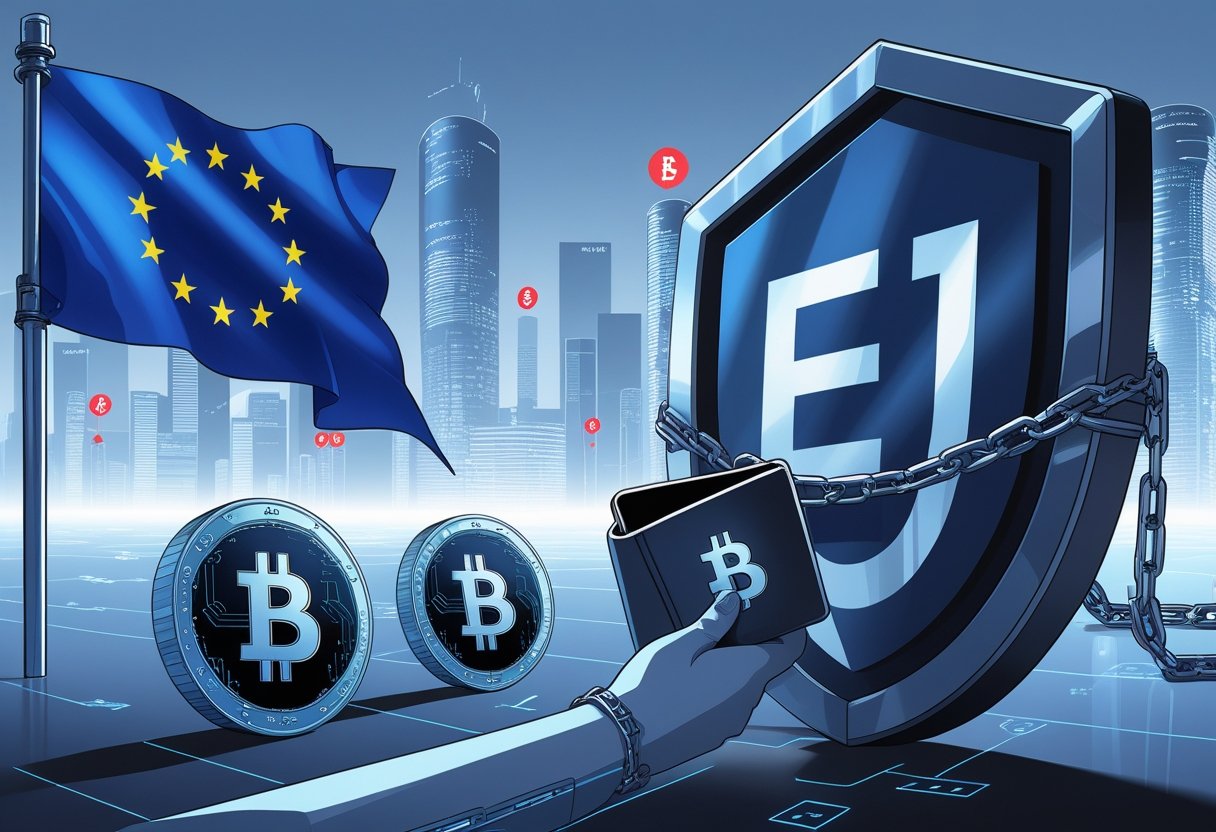
The regulation not only targets privacy coins but also focuses on self-custody and anonymous wallets, affecting how individuals store and manage their own assets. Crypto service providers will have to adapt to tougher compliance standards to continue operating in the European market. These changes mark a significant shift for the EU’s crypto environment and set a new standard for digital asset regulation.
Key Takeaways
- The EU will ban privacy coins and anonymous crypto accounts by July 2027.
- Crypto providers must adjust to new, stricter compliance rules.
- The changes could reshape how digital assets are used and regulated in Europe.
Overview of the EU AML Rules 2027
The European Union has passed strict new anti-money laundering (AML) rules set to take full effect by July 1, 2027. These laws ban privacy coins, require identity checks over certain thresholds, and place new requirements on crypto service providers.
Key Objectives and Motivations
The main aim of these rules is to stop illicit finance by increasing transparency in crypto transactions. EU lawmakers want to bring crypto under the same anti-money laundering standards as banks and other financial institutions.
Authorities say privacy coins make it easy for criminals to hide illegal transactions. By banning these coins, the EU hopes to reduce money laundering and terrorist financing.
Other goals include protecting citizens from fraud and limiting untraceable transfers. The rules are part of a wider effort to modernize AML rules for digital finance.
Scope of the 2027 Legislation
The 2027 AML laws will cover all crypto-asset service providers (CASPs), which include exchanges, wallets, and other platforms handling digital assets. Any company operating in more than six EU member states or serving over 20,000 users must comply with the stricter EU standards.
Privacy coins such as Monero, Zcash, and Dash will be completely banned across the EU. Anonymous crypto accounts and transfers above €1,000 will also be outlawed. All CASPs must collect and maintain identifying information about their users.
The rules do not only target privacy coins. They also affect self-custody wallets and peer-to-peer transactions, especially if those involve large amounts or anonymous parties.
Timeline and Implementation Phases
The core ban on privacy coins and anonymous accounts takes effect on July 1, 2027. Before this date, CASPs need to update systems, review compliance procedures, and stop supporting privacy-focused assets.
In the lead-up, regulators will publish detailed guidelines on exactly how the rules should be enforced. Crypto companies will be required to register and prove they can meet the new identification standards.
Authorities will assess and monitor compliance over different phases. Companies that fail to adapt by the deadline face heavy penalties and may lose their license to operate within the EU.
Ban on Privacy Coins
Privacy coins are set to be banned in the EU in 2027 under new anti-money laundering rules. This move targets specific digital currencies known for keeping transactions hidden and also aims to limit their use on trading platforms.
Definition and Examples of Privacy Coins
Privacy coins are cryptocurrencies designed to hide details about transactions, like the sender, receiver, or amount. Unlike Bitcoin and Ethereum, where most transactions are visible on a public ledger, privacy coins use special technology to make tracking and tracing difficult.
Main examples of privacy coins include:
- Monero (XMR): Hides transaction amounts and wallet addresses using advanced cryptography.
- Zcash (ZEC): Offers options for both transparent and private transactions.
- Dash (DASH): Includes mixing features to boost transaction privacy.
These coins have a strong following among users who value privacy and security. However, their emphasis on anonymity makes it easier for illegal activities to go unnoticed, fueling concern among regulators.
Legal Rationale for the Ban
The EU’s upcoming ban on privacy coins is part of its new Anti-Money Laundering Regulation (AMLR). Lawmakers believe that high privacy coins make it too easy to hide money, avoid taxes, or move illegal funds.
By banning them, the EU wants to bring crypto rules in line with standards that already apply to banks and other financial services. The goal is to make operations more transparent and help authorities track suspicious transactions.
Under AMLR, starting July 1, 2027, the creation, trading, and holding of privacy coins like Monero, Zcash, and Dash will not be allowed within EU borders. This legal shift is designed to close loopholes and ensure that only traceable digital assets remain in use.
Impact on Crypto Exchanges and Users
Crypto exchanges that operate in the EU will not be able to list or trade privacy coins after the ban takes effect. They will need to remove these coins and block any new purchases or deposits from users.
For individuals, this means holding or trading privacy coins within the EU will become illegal. Users may have to convert their privacy coins to other digital assets or risk penalties.
Service providers such as wallets and payment apps must also comply. This could lead to less privacy for all crypto users as strict identification checks and transaction monitoring become standard. Many privacy-focused projects may stop serving EU residents or close operations entirely.
Regulatory Focus on Self-Custody
The EU’s new Anti-Money Laundering (AML) rules do more than ban privacy coins. They also look closely at self-custody wallets and how individuals and companies manage cryptocurrencies directly.
Self-Custody Wallets in the New Regulations
Self-custody wallets allow users to hold and manage their private keys themselves, outside the control of any central exchange or platform.
Under the new EU rules, the focus falls on how these wallets interact with service providers, like crypto exchanges. When users move assets from a personal wallet to or from a regulated exchange, the service providers will be required to collect data about the sender and receiver.
The law does not ban self-custody wallets themselves. But it places new responsibility on regulated companies to monitor transactions involving those wallets.
Service providers must implement systems to detect and flag suspicious activity when transfers are made from self-custody wallets. This means transfers above certain thresholds, or to and from anonymous accounts, could be blocked or reported.
Implications for Individual Users
For everyday users, these changes mean more checks when they move crypto between their own wallets and exchanges.
Individuals may be asked to provide identifying information when moving assets. These details can include the name, address, and sometimes the source of funds. Users could see delays or rejections for transactions flagged as suspicious.
Anonymous transfers will be much harder to make once the rules take effect. Privacy and convenience for self-custody wallets will decrease in certain situations, especially for larger transactions. However, holding crypto in a private wallet remains legal, as long as the user follows the rules when interacting with regulated services.
Obligations for Service Providers
Crypto-Asset Service Providers (CASPs) must adapt their platforms to meet the new rules. They must gather, store, and, when needed, report data about users making transfers from or to self-custody wallets.
Key obligations include:
- Verifying sender and recipient identities
- Monitoring and flagging suspicious activity
- Reporting large or unusual transactions
Providers working in more than six EU countries or serving at least 20,000 customers will come under direct EU supervision. These stricter standards aim to close loopholes and stop illicit use of self-custody wallets within the EU. This may require new technology and compliance teams to handle increased record-keeping and oversight.
Compliance Requirements for the Crypto Sector

The European Union is introducing strict anti-money laundering (AML) rules aimed at crypto. New requirements will cover how companies verify user identities, report suspicious transactions, and monitor activities. These changes significantly affect how crypto businesses and users will operate.
New KYC and Reporting Standards
All crypto service providers in the EU must follow stronger Know Your Customer (KYC) rules. This means verifying customer identities before allowing trades or wallet access. Anonymous accounts will not be allowed, even for small transactions.
Providers must also report transfers above €1,000. Reports should include the sender’s and recipient’s IDs. They have to keep thorough records for inspections. These steps aim to block crypto from being used for money laundering or financing crime.
Authorities will check that providers follow these KYC and reporting rules. Failure to comply may lead to fines, restrictions, or criminal charges.
Obligations for Virtual Asset Service Providers
Virtual Asset Service Providers (VASPs), like exchanges and wallet services, face new responsibilities under the EU rules. They must actively prevent privacy coins—such as Monero, Zcash, and Dash—from being bought, sold, or transferred on their platforms.
VASPs must collect and store full customer data for every transaction. They need to make sure users cannot bypass identity checks, even for peer-to-peer transfers within their platforms.
A table of main provider duties:
| Duty | Description |
|---|---|
| Client Verification | Require valid ID for all users |
| Reporting | File reports for any transfer over €1,000 |
| Privacy Coin Restrictions | Ban actions involving privacy-enhancing coins |
| Record Keeping | Store transaction data for several years |
Monitoring and Enforcement Mechanisms
Enforcement will be direct and ongoing. The largest VASPs—those serving at least 20,000 customers or operating in six or more EU states—will come under EU-wide supervision. Regulators can audit operations, demand documents, or freeze assets if there is suspected non-compliance.
Inspections may be random or triggered by signs of suspicious activity. There are set penalties for breaches, including heavy fines and orders to block access to services. Smaller providers can also face checks based on risk.
The goal is to hold every actor in the crypto ecosystem accountable for following the new anti-money laundering laws.
Broader Impact on the European Crypto Ecosystem
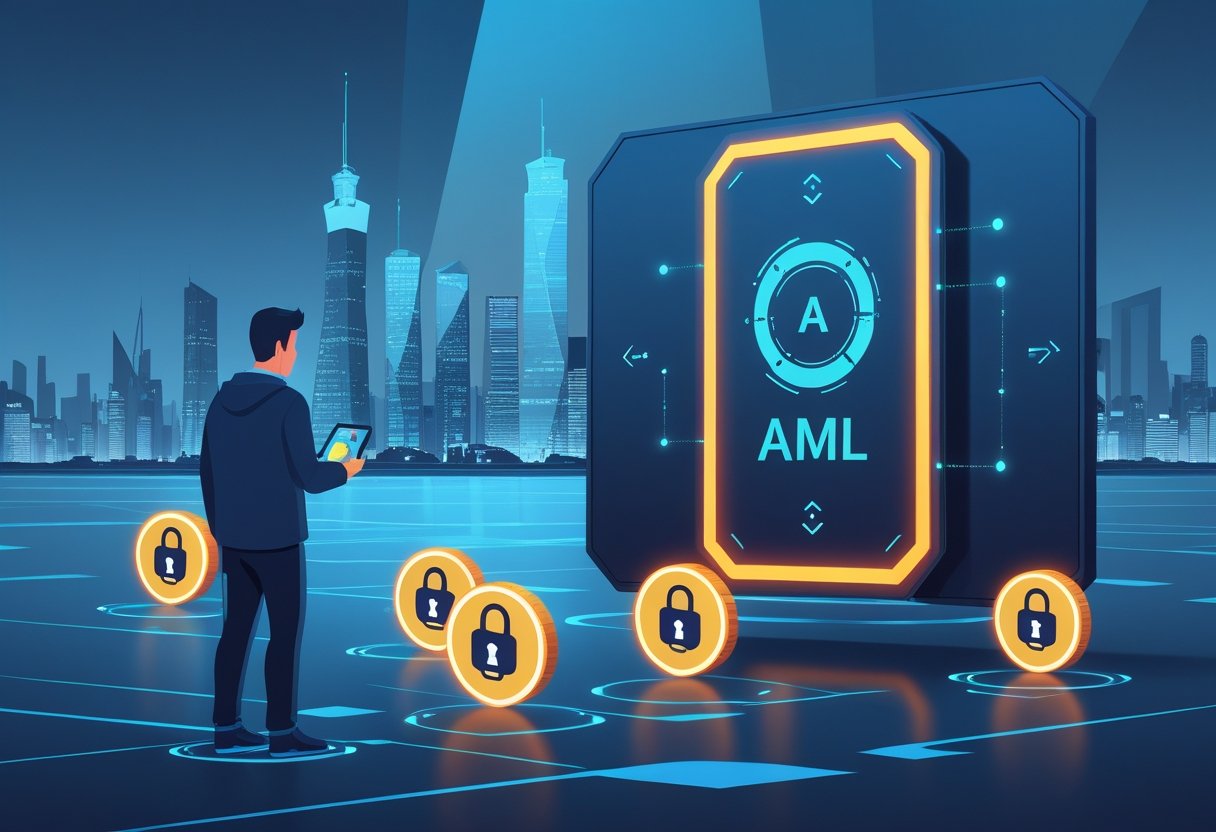
The EU’s 2027 ban on privacy coins and anonymous accounts aims to strengthen anti-money laundering efforts and market transparency. These changes will challenge how exchanges, developers, and users operate across Europe, while also pushing the ecosystem to adjust in new ways.
Market Reactions and Adaptations
Exchanges operating within the EU will have to delist privacy-focused coins like Monero, Zcash, and Dash. Service providers will need to enforce strict customer identification or risk fines. This move could reduce trading volume for privacy coins and shift activity to more transparent cryptocurrencies such as Bitcoin and Ethereum.
Retail investors and privacy-focused users may withdraw assets or seek platforms outside the EU. Institutional interest might grow as compliance makes the market more predictable. However, the ban may drive some users to peer-to-peer or decentralized exchanges that are harder to regulate.
| Category | Likely Impact |
|---|---|
| Exchanges | Delisting privacy coins |
| Users | Seeking alternatives |
| Institutions | Increased compliance focus |
Potential for Innovation and Workarounds
Developers may respond by building tools that let users maintain privacy while adhering to new EU rules. Projects could enhance transparency features or create new privacy solutions that work under strict regulation. Wallets and apps may introduce identity verification options to stay compliant.
At the same time, the focus on AML could inspire advancements in areas like zero-knowledge proofs, allowing some privacy features without breaking the law. Some crypto projects may pivot away from privacy features to target the broader European market.
Still, many privacy advocates might see these rules as a threat to user rights and drive new forms of on-chain privacy technologies outside the EU’s jurisdiction.
Risks of Regulatory Arbitrage
Regulatory differences between the EU and other regions could push businesses and users to move activity offshore. Crypto firms may relocate to countries with less restrictive rules, reducing tax revenue and oversight for EU authorities. This “regulatory arbitrage” may weaken the effectiveness of the ban.
Cross-border transactions could become harder to track, and users might turn to global decentralized platforms that have no central location or legal entity. As a result, the EU may face challenges in enforcing these rules on international players and in stopping illicit activities that simply move elsewhere.
International Comparisons
The EU’s rules introduce some of the strictest measures against privacy coins and anonymous crypto accounts set to take effect by 2027. These actions set the EU apart from other regions and are likely to affect how countries shape their own crypto regulations.
How EU AML Rules Differ from Other Jurisdictions
The EU’s Anti-Money Laundering Regulation (AMLR) will ban privacy coins like Monero and Zcash, as well as anonymous crypto accounts, by July 1, 2027. Most other regions allow privacy coins, though with varying restrictions.
| Region | Privacy Coins Status | Anonymous Accounts |
|---|---|---|
| European Union | Full ban from July 2027 | Banned from July 2027 |
| United States | No national ban, but increased scrutiny | Not allowed at regulated exchanges |
| Japan | Ban on some privacy coins | Strict KYC rules |
| Singapore | Allowed but under AML rules | KYC required |
The EU’s approach is broader and stricter than measures seen in the US or Asia. The regulation targets both the technology (privacy coins) and the use case (anonymous accounts), aiming for maximum transparency. Other regions often focus only on reporting rules for exchanges and don’t ban specific coins.
Influence on Global Regulatory Trends
The EU’s decision is likely to influence other financial centers because of its size and regulatory reach. Jurisdictions with close trade and financial ties to the EU may face pressure to align their crypto rules for smoother business interactions.
International bodies like the Financial Action Task Force (FATF) have already recommended increased controls over crypto privacy. The EU’s direct ban goes a step further, making it a possible model for countries seeking stricter controls.
Industry groups and policy-makers in jurisdictions outside the EU are watching these developments closely. Some countries may follow the EU’s lead, while others could adopt different models based on tech innovation or market needs. This division could create zones with very different approaches to privacy and crypto compliance.
Future Outlook for Privacy and Financial Sovereignty
Privacy coins and user control over crypto are set to face significant restrictions in the EU by 2027. New rules will restrict the anonymous use of cryptocurrencies and make privacy harder to maintain for everyday users.
Prospects for Privacy Coin Development
Privacy coins like Monero, Zcash, and Dash depend on technology that hides transaction details. The new EU rules will ban these coins in member countries, stopping exchanges and service providers from supporting them. This means developers may shift their focus away from the EU or try to find legal loopholes.
Some teams could invest in research to create new privacy solutions that meet certain legal standards. Cross-border development might increase, with more projects focusing on regions outside the EU. The table below shows two likely paths for privacy coin communities:
| Response | Potential Outcome |
|---|---|
| Move operations abroad | Continue development outside EU |
| Adapt technology | Create coins with less anonymity |
Without access to large regulated markets, funding and growth may slow. Still, privacy advocates see this as a challenge to find new ways to protect user information.
Implications for User Autonomy in Crypto
From July 2027, self-custody and anonymous crypto accounts will face new strict rules in the EU. Users will have to verify their identities for most crypto transactions and accounts. Crypto service providers must collect and store personal data, reducing financial privacy.
Self-custody wallets are not banned but may face indirect restrictions. Some users could find it hard to move funds between private wallets and regulated exchanges. This affects not just the users’ privacy, but also their control over their assets.
People who value autonomy might switch to decentralized platforms outside the EU’s legal reach. However, this shift often comes with new risks, such as fewer safeguards and limited legal protection. These changes set a new standard for privacy and control in the digital economy.
Frequently Asked Questions
The EU’s new anti-money laundering rules introduce strict regulations for privacy coins and anonymous crypto activities. Crypto service providers must follow new compliance steps by 2027 to avoid serious penalties.
What specific types of cryptocurrency are affected by the EU’s new AML regulations?
The regulations affect privacy coins such as Monero (XMR), Zcash (ZEC), and Dash. Any coin or token that hides transaction details and makes tracing by authorities difficult falls under these rules. Other cryptocurrencies may also be affected if they allow anonymous or untraceable transactions.
How do the EU AML directives address privacy coins and self-custody wallets?
Privacy coins will be fully banned within the EU by July 1, 2027. Crypto platforms will not be allowed to list, sell, or support these tokens. While self-custody wallets are not outright banned, stricter rules will limit their use in anonymous transactions, and full identification (KYC) will be required for many activities.
What measures must European exchanges implement to comply with the 2027 crypto regulations?
Exchanges must delist privacy coins and block anonymous crypto transactions. They need to apply “Know Your Customer” (KYC) procedures for all users. Regular monitoring, transaction reporting, and cooperation with authorities are now requirements for maintaining licenses.
Are there any exceptions or safe harbors in the EU AML rules for cryptocurrency holders?
The regulations do not provide broad exceptions for holding privacy coins or using anonymous accounts. Some minor exceptions could apply in cases defined by law, but these are limited. Most individuals and businesses must comply fully with the new identification and reporting rules.
How will the ban on privacy coins impact the broader cryptocurrency market within the EU?
The ban will reduce the use and trading volume of privacy coins in the EU. Exchanges and wallet providers may see fewer privacy coin-related services and less demand. Other cryptocurrencies that follow AML rules may see increased usage among European users.
What are the repercussions for non-compliance with the EU’s anti-money laundering rules in the crypto sector?
Companies and individuals who do not comply face heavy fines, loss of licenses, and possible legal action. Regulators have more power to investigate suspicious crypto activities. Continued non-compliance can also lead to criminal charges or permanent shutdown of platforms.
Related articles
- What a Crypto Public Key Is and How It Works
- What a Crypto Private Key Is and Why It Matters
- What a Crypto Seed Phrase Is and Why It Matters
- Custodial vs Non-Custodial Wallets: Key Differences Explained