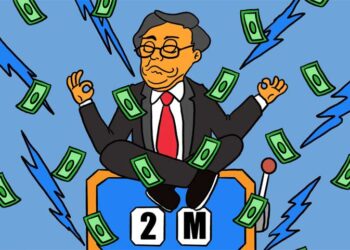


Polymarket, a blockchain-based prediction market platform, is again under scrutiny—this time over a disputed outcome tied to Ukrainian President Volodymyr Zelenskyy’s attire and the role of UMA, the decentralized oracle system used to resolve many Polymarket markets.
UMA is separate from Polymarket, but it plays a decisive role in settling outcomes through token-holder voting. Critics argue the model can reward coordination over accuracy, creating repeat disputes when “what happened” and “how the oracle voted” diverge.
What happened: the Zelenskyy “suit” market dispute
The controversy centers on a market that asked: “Will Zelenskyy wear a suit before July?” Following the NATO summit appearance on June 25, several major outlets—including the BBC and New York Post—described Zelenskyy as wearing a suit.
Despite that coverage, the market ultimately resolved “No”, angering traders who believed the public reporting supported a “Yes” outcome. Because the market reportedly saw over $200 million in volume, the resolution had outsized financial consequences for participants (and reputational consequences for the ecosystem).
Why UMA oracle voting draws criticism
Incentives: voting with the majority, not the facts
A prominent Polymarket trader known as “RememberAmalek” argued that UMA’s incentive structure pressures voters to align with the expected majority rather than the best interpretation of evidence. The key mechanic critics point to is slashing: participants risk losing staked tokens if they vote “incorrectly” relative to the final consensus, which can discourage contrarian (even evidence-based) votes.
Concentration risk: whale influence and perceived centralisation
Critics also point to token concentration as an amplifier of governance risk. The claim circulated in the community—citing dashboards and on-chain analytics (e.g., IntoTheBlock and Dune)—is that a very large share of UMA supply is controlled by large holders (“whales”). Even if exact percentages fluctuate over time, the underlying concern remains: if a small number of wallets can heavily influence disputed outcomes, the oracle can feel centralised in practice.
A broader pattern: when resolution becomes the “real” bet
This is not the first time UMA-linked resolutions have sparked backlash from Polymarket users. Detractors say the repeated lesson is that some markets end up functioning less like predictions about the world and more like predictions about how UMA voters will coordinate.
RememberAmalek—who has been reported as profiting significantly across multiple Polymarket accounts—summed up this dynamic bluntly: traders may start optimising for expected voting behaviour instead of underlying facts.
Calls for reform and clearer accountability
The latest dispute has renewed calls for structural changes. Some users argue for:
- Clearer market definitions (tight wording, objective criteria, and pre-committed sources of truth).
- More transparent dispute processes (public evidence standards, documented rationale, and post-mortems for contentious resolutions).
- Different resolution models, including more directly accountable mechanisms—potentially involving more centralised decision-making, but with explicit governance, auditability, and appeals.
“If a single whale can determine multi-million-dollar outcomes, that’s not true decentralization,” RememberAmalek concluded.
EU angle: what this controversy signals for European users
For EU readers, the incident is also a reminder of operational and consumer-risk questions around prediction markets and crypto-based dispute systems:
- Dispute design matters: outcomes can turn on wording and oracle governance rather than commonly understood “real-world” events.
- Transparency and accountability expectations are typically higher in the EU consumer context; opaque or unpredictable resolution outcomes can intensify trust and fairness concerns.
- Regulatory perimeter may differ by product: depending on structure, prediction markets can intersect with gambling, financial instruments, or consumer-protection regimes—adding complexity for platforms operating across borders.
This article is informational and does not provide financial advice.
FAQ
What is UMA’s role in Polymarket resolutions?
UMA is an oracle framework used to resolve certain Polymarket markets via token-holder voting, especially when outcomes are disputed. While Polymarket hosts the market, UMA’s voting can determine the final settlement.
Why were traders upset about the Zelenskyy “suit” outcome?
Traders pointed to widely circulated media descriptions that characterised Zelenskyy’s NATO appearance as a suit. The market still resolved “No,” which many saw as contradicting public evidence and common interpretation.
Does decentralised oracle voting guarantee objective results?
Not necessarily. Decentralised voting systems can be shaped by incentives (like slashing), coordination dynamics, and token concentration. In contentious cases, the result may reflect voting behaviour more than a single uncontested “ground truth.”
Key takeaways
- Polymarket’s latest backlash stems from a high-profile “Zelenskyy suit” market resolved “No” via UMA voting despite prominent media descriptions.
- Critics argue UMA’s incentives can push voters toward majority alignment rather than evidence-based decisions.
- Token concentration concerns fuel claims that a few large holders can disproportionately influence outcomes.
- Repeated disputes risk turning prediction markets into bets on oracle behaviour, not real-world events.
- For EU users, transparency, accountability, and consumer-risk considerations are central when outcomes hinge on governance mechanics.